Abstract
This study presents a lightweight non-autoclaved foam concrete with a target dry density of approximately 500 kg/m3 and improved compressive strength. The proposed composite binder system includes microsilica, microcalcite, and a polycarboxylate-based superplasticizer. The novelty lies in the combined use of microsilica and microcalcite as a dual modification system: microsilica promotes additional C-S-H formation and matrix densification, while microcalcite improves particle packing and stabilizes the closed-pore structure. After 28 days, the developed foam concrete achieved a dry density of 505±10 kg/m3, compressive strength of 4.6 MPa, thermal conductivity of 0.12 W/(m·K), water absorption of 18 %, and closed pore content of 82 %. The results indicate that the material is suitable for lightweight structural and thermal-insulating applications. Its reduced density is also beneficial for energy-efficient and seismic-resistant construction. A preliminary economic and environmental assessment indicates the potential advantages of the proposed composition.
1. Introduction
Lightweight concretes are widely used in modern construction due to increasing demands for energy efficiency, reduced structural loads, and sustainable development. Non-autoclaved foam concrete (NAFC) is of particular interest because of its simple production technology, on-site manufacturability, low thermal conductivity, and environmental advantages [1]. Previous studies have shown that the properties of foam concrete are strongly influenced by pore structure, density, mix composition, and foaming agent type [2, 3, 4-8]. The relationship between density and compressive strength has also been described using strength prediction models for foam concrete [8].
However, conventional NAFC with densities below 600 kg/m3 typically exhibits relatively low compressive strength, which limits its application mainly to non-load-bearing and thermal insulation elements [4, 5, 7]. Therefore, improving strength while maintaining low density, stable pore structure, and acceptable thermal performance remains a key research challenge.
One effective solution is to modify the cement matrix with finely dispersed mineral additives that improve microstructural densification and pore system stability [2, 3]. Microsilica and microcalcite have shown particular potential in this regard [9]. Microsilica contributes to pozzolanic reactions and the formation of additional C-S-H phases, while microcalcite acts as a microfiller and promotes pore stabilization. Their combined use can provide a synergistic effect, leading to improved pore homogeneity and enhanced mechanical performance at low density [10].
In addition, the elimination of autoclave curing and partial replacement of cement clinker with mineral additives can improve the economic and environmental efficiency of NAFC by reducing energy consumption and carbon emissions [4, 5]. This research is also relevant to energy-efficient and seismic-resistant construction. Lightweight foam concrete can be used in partition walls, thermal-insulating wall blocks, envelope structures, and non-load-bearing or lightly loaded elements in low- and mid-rise buildings. In regions with increased seismic activity, reducing the self-weight of building components is especially important because it can decrease inertial forces during earthquakes.
The novelty of this study lies in the combined use of microsilica and microcalcite for simultaneous chemical and physical modification of low-density non-autoclaved foam concrete. Microsilica promotes additional C-S-H formation, while microcalcite improves particle packing and stabilizes the pore structure, enabling higher compressive strength at a target dry density of approximately 500 kg/m3.
This study aims to develop the modified foam concrete and evaluate its physical and mechanical properties, pore structure, thermal conductivity, preliminary production cost, and carbon footprint. The results provide a basis for assessing its practical applicability in energy-efficient and seismic-resistant construction.
2. Materials and methods
2.1. Materials
The raw materials used in this study are summarized in Table 1.
Table 1Main characteristics and functions of raw materials
Material | Source / producer | Main characteristics | Function |
CEM II/A-K 42.5 H cement | JSC “Akhangarancement”, Uzbekistan | Portland-limestone cement containing 10-20 % limestone filler | Main binder |
Quartz sand | Chinaz quarry, Tashkent region, Uzbekistan | Particle size ≤ 0.315 mm; SiO2 97.0 %; true density 2.63 g/cm3; bulk density 1.56 g/cm3; Mk = 1.2; dust and clay particles 1.5 % | Siliceous fine aggregate |
Microsilica | JSC “Uzmetkombinat”, Uzbekistan | SiO₂ 92%; particle size < 1 μm; bulk density 0.5 g/cm3; true density 1.5 g/cm3; specific surface area 4440 cm2/g; TSh 64-17763936-006:2008 | Pozzolanic additive |
Microcalcite | Marble crushing waste, Kashkadarya quarry, Uzbekistan | CaCO₃-based microfiller; specific surface areas 8735, 3350, and 1441 cm2/g | Microfiller and pore stabilizer |
Superplasticizer | MasterGlenium ACE, Germany | Polycarboxylate-based; density 1.10 ± 0.02 g/cm3 at 20 °C; pH 6.4 ± 1.0 | Workability improvement and water reduction |
Foaming agent | PB-2000, Russia | Synthetic liquid foaming agent based on anionic surfactants | Foam generation |
Water | Tap water | – | Mixing and foam preparation |
2.2. Mix composition
The mix composition is given in Table 2.
The mix design was developed to obtain a target dry density of approximately 500 kg/m3 with improved compressive strength and stable pore structure. The composition included 340 kg/m3 of Portland-limestone cement CEM II/A-K, 100 kg/m3 of quartz sand ≤ 0.315 mm, 20 kg/m3 of microsilica, and 25 kg/m3 of microcalcite. Microsilica was used for pozzolanic matrix densification, while microcalcite acted as a microfiller and pore-stabilizing component.
Table 2Mix proportions per 1 m3 of fresh foam concrete
Component | Amount |
Cement CEM II/A-K | 340 kg |
Quartz sand | 100 kg |
Microsilica | 20 kg |
Microcalcite | 25 kg |
Water | 160 kg |
Superplasticizer | 2.4 kg (0.7 % of binder weight) |
Liquid foaming agent | 1.2 L |
Foam volume in the mix | approximately 55-60 % |
The water content was 160 kg/m3, corresponding to W/C ≈ 0.47 and W/B ≈ 0.42. A polycarboxylate-based superplasticizer was used at 2.4 kg/m3 approximately 0.7 % of binder mass, and a synthetic liquid foaming agent was used at 1.2 L/m3. The foam volume was maintained at 55-60 %, providing a balance between density, strength, pore stability, and thermal insulation capacity.
2.3. Testing and curing conditions
Compressive strength – applicable standard test procedure; 100×100×100 mm cubes tested at 7, 14, and 28 days.
Density – according to ASTM C642.
Thermal conductivity – according to EN 12667.
Pore structure – optical microscopy with digital image analysis.
Economic analysis – based on 2025 market prices in USD.
Carbon footprint assessment — preliminary, based on standard emission factors.
According to the relevant standards for cellular concrete, three specimens were tested for each mix composition, and the reported values represent the average results.
After demolding, the specimens were cured in a humidity chamber at a temperature of (20±2) °C and a relative humidity of at least 95 %. At the age of 28 days, excess surface moisture was removed, after which the specimens were weighed and their density was determined.
For thermal conductivity testing, plate specimens with dimensions of 30×30×3 cm were prepared. After 28 days of curing, the specimens were dried to constant mass, and their thermal conductivity was then measured.
2.4. Chemical interactions
The enhanced mechanical properties of the foam concrete are attributed to combined chemical and physical mechanisms. Microsilica contains highly reactive amorphous silicon dioxide (SiO2), which reacts with calcium hydroxide formed during cement hydration. This pozzolanic reaction produces additional calcium silicate hydrate (C-S-H), the main binding phase of the cement matrix, as shown in Eq. (1):
The additional C-S-H densifies the cement matrix, fills capillary pores, and strengthens the inter-pore walls. Microcalcite is largely inert during hydration; however, its fine particles act as nucleation sites, improve particle packing, and contribute to a more uniform pore structure. It may also stabilize the foam by adsorbing at the air-water interface and reducing bubble coalescence.
Together, these mechanisms provide matrix densification and pore structure stabilization, resulting in improved compressive strength at low density.
3. Results and discussion
To evaluate the effectiveness of the proposed modification approach, experimental studies were conducted to assess the physical, mechanical, and structural properties of the developed foam concrete.
3.1. Physical and mechanical properties
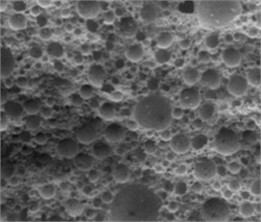
To support the discussion of pore structure formation, SEM images of the control and modified foam concrete were compared. Figs. 1 and 2 show differences in pore morphology and matrix density between the unmodified and modified compositions.
Table 3The following performance characteristics after 28 days of curing
Property | Value |
Dry density | 505±10 kg/m3 |
Compressive strength | 4.6 MPa |
Thermal conductivity | 0.12 W/(m·K) |
Water absorption | 18 % |
Closed pore content | 82 % |
SEM and optical microscopy revealed predominantly fine, spherical closed pores with diameters of 0.2-0.8 mm in the modified foam concrete (Fig. 2). Compared with the control sample (Fig. 1), the modified composition showed a more uniform pore distribution, fewer visible defects, and denser inter-pore walls, indicating improved foam stability during production and curing.
This microstructure is attributed to the optimized foam content (55-60 %) and the combined action of microsilica and microcalcite. Microcalcite improves particle packing and may stabilize pores by adsorbing at the air–water interface, while microsilica promotes hydration and strengthens inter-pore walls through additional C-S-H formation.
Overall, Figs. 1 and 2 support the conclusion that the combined use of microsilica and microcalcite improves pore structure stability and matrix density, which explains the increase in compressive strength while maintaining low density and thermal insulation capacity.
Fig. 1SEM microstructure of the control non-autoclaved foam concrete without mineral additives at ×450 magnification. The image was obtained at the Center of Advanced Technologies, Tashkent, Uzbekistan, in 2025, within joint experimental work conducted by the authors and Jamilya Abdullaeva. Written consent for the use of the image was obtained
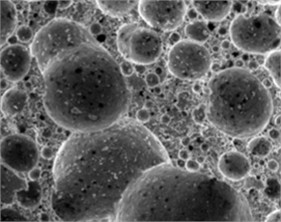
Fig. 2SEM microstructure of non-autoclaved foam concrete modified with microsilica and microcalcite at ×450 magnification. The image was obtained at the Center of Advanced Technologies, Tashkent, Uzbekistan, in 2025, within joint experimental work conducted by the authors and Jamilya Abdullaeva. Written consent for the use of the image was obtained
Improving the strength of low-density non-autoclaved foam concrete (NAFC) requires both cement matrix modification and pore structure stabilization. In this study, microsilica (MS) and microcalcite (MC) were used as complementary mineral additives.
Fig. 3 shows that compressive strength increases with dry density, which is associated with lower total porosity and thicker inter-pore walls. This confirms the importance of density control for balancing low weight and mechanical performance.
Fig. 4 illustrates the effect of microsilica content on compressive strength. The strength increase at the optimal dosage is related to the pozzolanic activity of microsilica and the formation of additional C-S-H gel, which densifies the cement matrix.
Fig. 5 shows the influence of foam volume. Increasing foam volume reduces density, but excessive foam content decreases strength due to thinner pore walls and higher porosity. Therefore, the selected foam volume of 55-60 % provides a reasonable balance between density, strength, and thermal insulation.
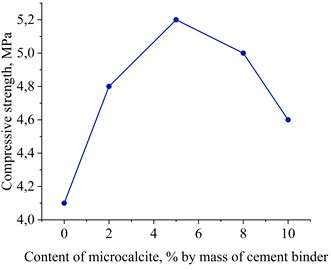
Fig. 6 presents the effect of microcalcite content. The improvement at the optimal dosage is attributed to the microfiller effect, improved particle packing, and pore structure stabilization.
The best performance was achieved at 5-7 % microsilica and 5-8 % microcalcite by mass of cement. Deviation from this range may reduce workability or destabilize the foam, leading to lower strength. Overall, Figs. 3-6 support the conclusion that the improved performance of NAFC results from combined control of density, foam volume, and mineral additive content.
Fig. 3Relationship between density and compressive strength of non-autoclaved foamed concrete
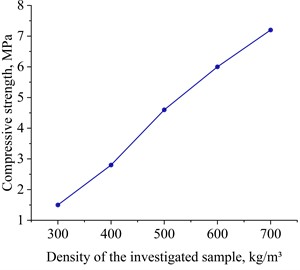
Fig. 5Effect of foam volume on the compressive strength of non-autoclaved foamed concrete
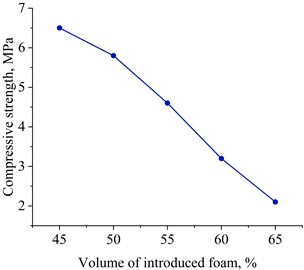
Fig. 4Effect of microsilica content on the compressive strength of non-autoclaved foamed concrete
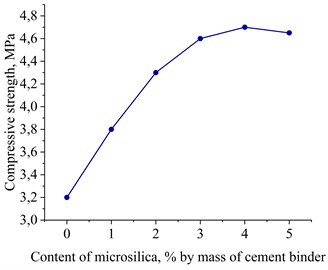
Fig. 6Effect of microcalcite content on the compressive strength of non-autoclaved foamed concrete
3.2. Economic analysis
Thus, the proposed mix design is economically competitive compared to autoclaved aerated concrete (AAC), which typically ranges from 70 to 85 USD/m3, while offering significantly higher strength performance.
Table 4Economic analysis
Material | Price, USD/t | Consumption, kg/m3 | Cost, USD/m3 |
Cement | 120 | 340 | 40.80 |
Sand | 25 | 100 | 2.50 |
Microsilica | 450 | 20 | 9.00 |
Microcalcite | 100 | 25 | 2.50 |
Superplasticizer | 2000 | 2.4 | 4.80 |
Foaming agent | 3500 | 1.2 | 4.20 |
Total | – | – | 63.80 USD/m3 |
3.3. Carbon footprint
A preliminary carbon footprint assessment was carried out using average emission factors from open-access databases, including Ecoinvent and the ICE Database, and published LCA studies. Relevant environmental regulations of the Republic of Uzbekistan were considered to ensure consistency with national environmental requirements.
Table 5Carbon footprint analysis
Material | Emissions, kg CO2/t | Mass, kg/m3 | Contribution, kg CO2/m3 |
Cement | 600 | 340 | 204.00 |
Sand | 10 | 100 | 1.00 |
Microsilica | 100 | 20 | 2.00 |
Microcalcite | 50 | 25 | 1.25 |
Superplasticizer | 2500 | 2.4 | 6.00 |
Foaming agent | 4500 | 1.2 | 5.40 |
Total | – | – | 219.65 kg CO2/m3 |
As shown in the Table 5, cement accounts for the largest share of the estimated carbon footprint, approximately 93 %, which is typical for many cement-based materials. The use of CEM II/A-K cement with 10-20 % limestone filler and partial replacement of cement with microsilica and microcalcite may reduce material-related emissions compared with traditional clinker-rich binders. Although chemical admixtures have relatively high unit emission factors, their low dosages result in a minor contribution to the total estimated carbon footprint.
For comparison, autoclaved aerated concrete (AAC) of similar density, approximately 500 kg/m3, is reported to generate about 250-280 kg CO2/m3 due to lime-silica binders and energy-intensive autoclaving. Based on the preliminary assessment, the proposed NAFC may provide an estimated 15-20 % reduction in carbon emissions while maintaining improved compressive strength for the target density range. Its potential for local production without centralized autoclaving and improved thermal insulation indicates its suitability for more sustainable and energy-efficient construction in Uzbekistan.
3.4. Practical relevance and scope alignment
The developed non-autoclaved foam concrete can be used for partition walls, thermal-insulating blocks, envelope structures, and lightly loaded elements in low- and mid-rise buildings. Its low density is also beneficial for seismic-resistant construction, where reduced self-weight can decrease inertial loads. Thus, the material has practical potential for sustainable and energy-efficient construction.
4. Conclusions
A lightweight non-autoclaved foam concrete with a target dry density of approximately 500 kg/m3 was developed using microsilica, microcalcite, a synthetic foaming agent, and a polycarboxylate-based superplasticizer. After 28 days, the material achieved a dry density of 505±10 kg/m3, compressive strength of 4.6 MPa, and thermal conductivity of 0.12 W/(m·K).
The improved performance is attributed to the combined action of microsilica and microcalcite, which provided matrix densification and pore structure stabilization. The proposed composition showed compressive strength approximately 30-40 % higher than typical NAFC of similar density. A preliminary assessment indicated a production cost of 63.8 USD/m3 and a potentially 15-20 % lower carbon footprint than comparable autoclaved aerated concrete.
The developed material is suitable for energy-efficient partition walls, thermal-insulating blocks, envelope elements, and lightly loaded components in low- and mid-rise buildings. Its reduced density is also beneficial for seismic-resistant construction, where lower structural self-weight can reduce inertial loads under dynamic actions. Future research should focus on drying shrinkage, frost resistance, water resistance, and long-term durability.
References
-
M. R. Jones and A. Mccarthy, “Preliminary views on the potential of foamed concrete as a structural material,” Magazine of Concrete Research, Vol. 57, No. 1, pp. 21–31, Feb. 2005, https://doi.org/10.1680/macr.2005.57.1.21
-
E. K. K. Nambiar and K. Ramamurthy, “Influence of filler type on the properties of foam concrete,” Cement and Concrete Composites, Vol. 28, No. 5, pp. 475–480, May 2006, https://doi.org/10.1016/j.cemconcomp.2005.12.001
-
E. P. Kearsley and P. J. Wainwright, “Porosity and permeability of foamed concrete,” Cement and Concrete Research, Vol. 31, No. 5, pp. 805–812, May 2001, https://doi.org/10.1016/s0008-8846(01)00490-2
-
K. Ramamurthy, E. K. Kunhanandan Nambiar, and G. Indu Siva Ranjani, “A classification of studies on properties of foam concrete,” Cement and Concrete Composites, Vol. 31, No. 6, pp. 388–396, Jul. 2009, https://doi.org/10.1016/j.cemconcomp.2009.04.006
-
E. K. K. Nambiar and K. Ramamurthy, “Models for strength prediction of foam concrete,” Materials and Structures, Vol. 41, No. 2, pp. 247–254, 2007, https://doi.org/10.1617/s11527-007-9234-0
-
A. A. Hilal, N. H. Thom, and A. R. Dawson, “On entrained pore size distribution of foamed concrete,” Construction and Building Materials, Vol. 75, pp. 227–233, Jan. 2015, https://doi.org/10.1016/j.conbuildmat.2014.09.117
-
Y. H. M. Amran, N. Farzadnia, and A. A. Abang Ali, “Properties and applications of foamed concrete: a review,” Construction and Building Materials, Vol. 101, pp. 990–1005, 2015, https://doi.org/10.1016/j.conbuildmat.2015.10.112
-
D. K. Panesar, “Cellular concrete properties and the effect of synthetic and protein foaming agents,” Construction and Building Materials, Vol. 44, pp. 575–584, Jul. 2013, https://doi.org/10.1016/j.conbuildmat.2013.03.024
-
L. Li and H. Li, “Synergistic effect of Micro-Silica and Nano-CaCO₃ on cement hydration,” Construction and Building Materials, Vol. 229, p. 116898, 2019.
-
S. Chandra and L. Berntsson, “Lightweight aggregate concrete: science, technology and applications,” in Lightweight Aggregate Concrete, Norwich: Noyes Publications, 2002, pp. 369–400, https://doi.org/10.1016/b978-081551486-2.50014-6
About this article

The authors have not disclosed any funding.
The authors acknowledge Jamilya Abdullaeva for her contribution to the SEM analysis carried out at the Center of Advanced Technologies, Tashkent, Uzbekistan. The SEM images used in this manuscript were obtained within joint experimental work, and written consent for their use was obtained.
The datasets generated during and/or analyzed during the current study are available from the corresponding author on reasonable request.
The authors declare that they have no conflict of interest.

